This post might be too long for a viewing on email. Open this post directly from Substack instead by clicking the entry point inside the email :)
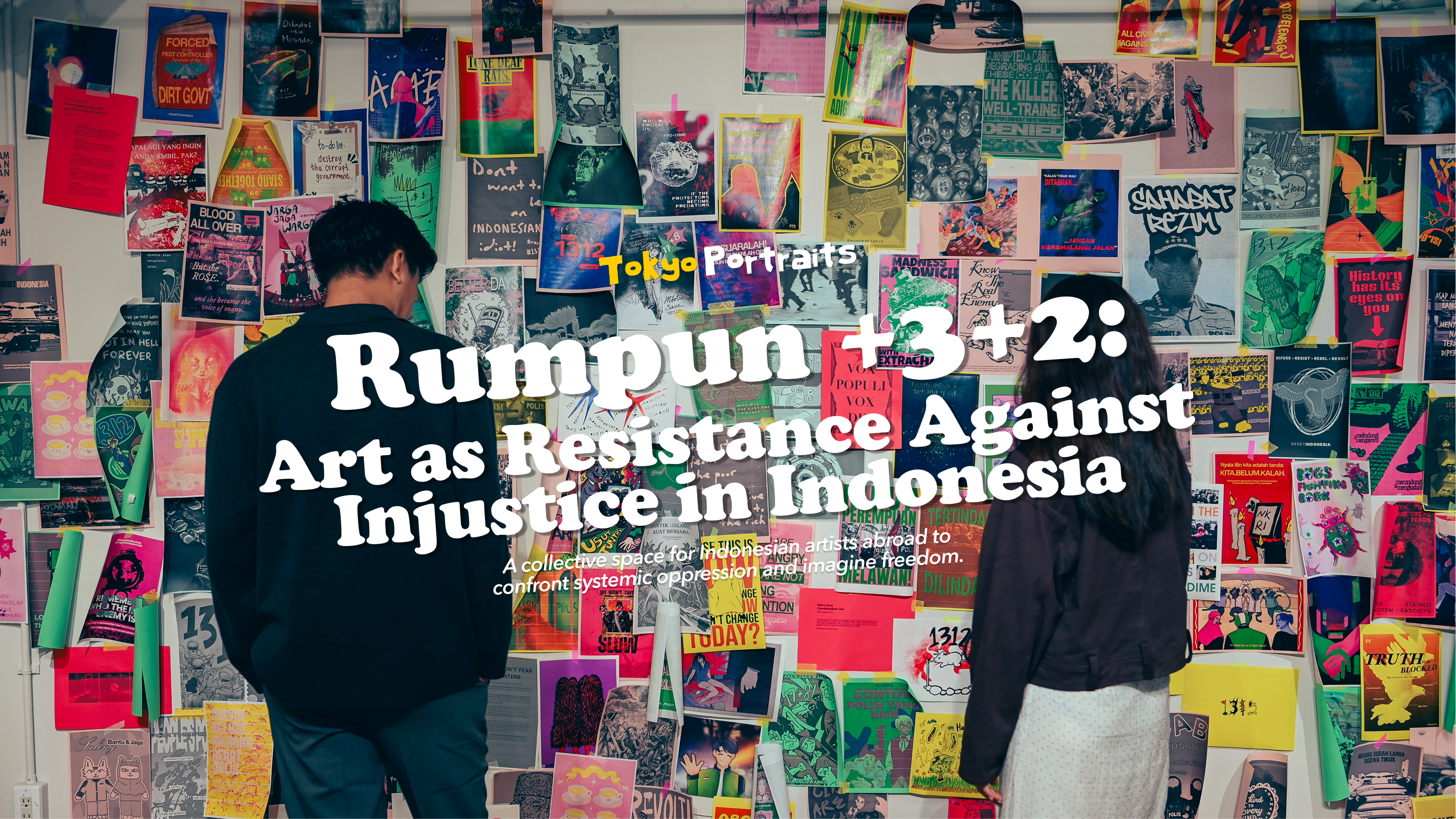
In my last Tokyo Portraits post, I mentioned one of the must-see art events this month: Rumpun +3+2. Initiated by some of my friends Dityo, Karina, and Alyssa, the event creates a space where grassroots Indonesian artists can express themselves freely through visual language. This time, responding directly to what is happening in Indonesia, my home country.
If you haven’t been following, the situation back home has been deeply troubling. The political and economic climate continues to deteriorate, many workers are unemployed, everyday people are struggling to get by, yet the government recently approved a staggering salary and allowance increase for parliament members, amounting to 72 times Jakarta’s minimum wage. That is one of the trigger to a major protest happening right now.
Even though I now live in Japan, I can’t detach myself from these realities. It makes me uneasy, it makes me sad, and it reminds me how much my country still matters to me. Writing about this event is my small way of contributing, by sharing awareness and highlighting how Indonesian artists are confronting these issues through their work.
This is where Rumpun +3+2 becomes more than an exhibition, it becomes a collective response.


About Rumpun +3+2
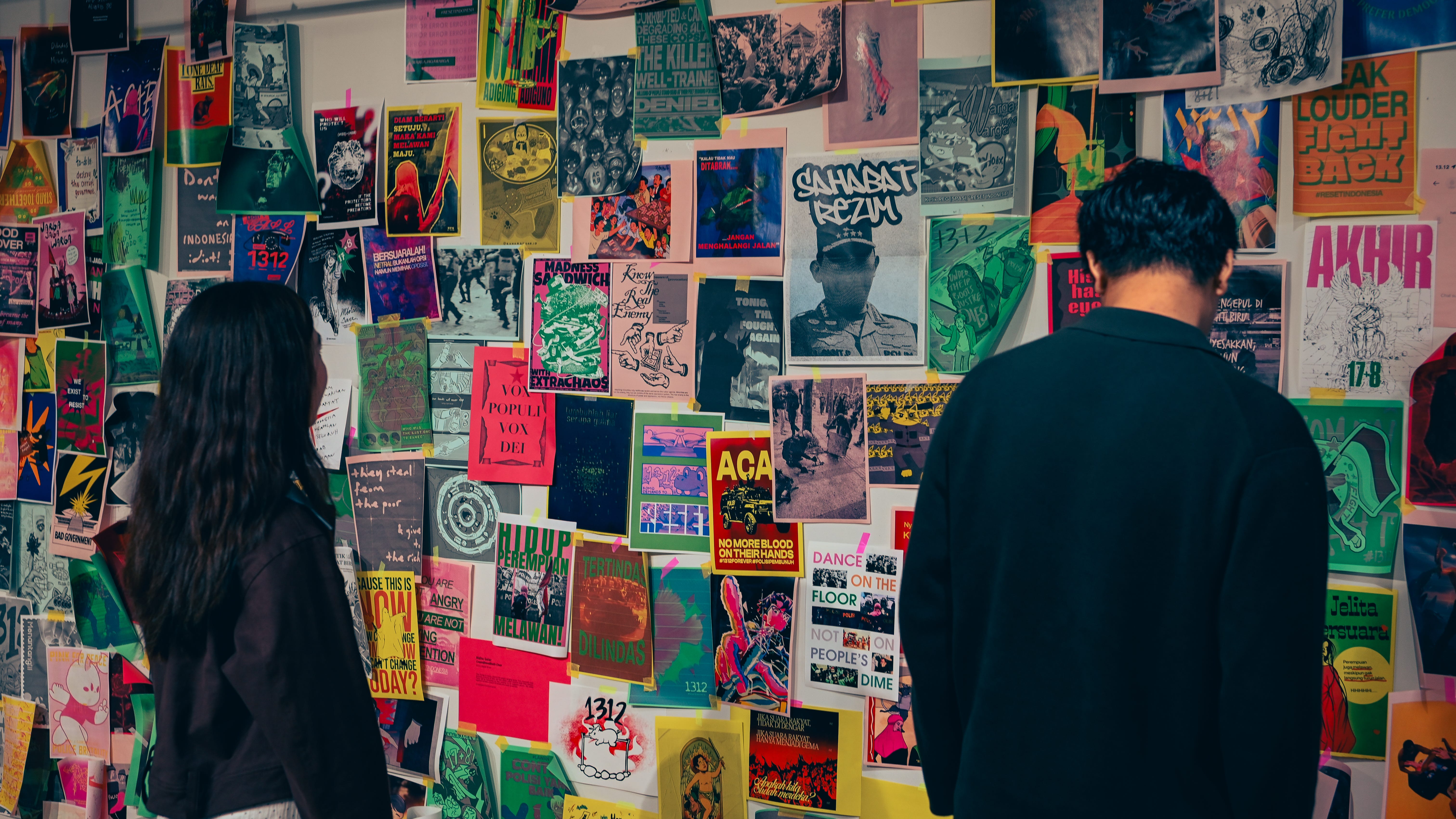
When I asked my friends Dityo, Karina, and Alyssa, the organizer of Rumpun, what the intention was behind this new iteration, Dityo told me:
“Rumpun was always meant to be a place where grassroots artists could express themselves, whether visually or through literary art like poetry. The art world is still very elitist, and Rumpun tries to give artists the chance to feel and acknowledge themselves as ‘artists’ by showing their work physically. Even with the limitations of format, printing quality, or location, having your work displayed and seen by others can be a huge reassurance to your artistic identity.”
That struck me, because it shows how simple yet powerful the idea is. It’s not about gatekeeping or deciding what’s “good” or “bad” art, it’s about creating space.


I then asked why this iteration specifically takes on systemic injustice and police brutality in Indonesia. Karina’s and Alyssa’s answer was clear:
“We wanted to bring Rumpun into the current movement of fighting oppression, to state that art has always been political. Not everyone can be on the frontlines of a protest. Not every artist can scream ‘No’ to oppression on the streets. But through this event, their art can speak on their behalf.”
The name +3+2 itself carries that spirit. I was curious about it, and they explained:
“It’s basically 13 and 12, with the 10 replaced by the kanji 十. The (+) can be read as positivity, and the kanji 十 is used in words like 十分 (jūbun: sufficient), 十字路 (jūjiro: crossroads), or 辻 (tsuji: intersection). We wanted to take this iteration in a positive light, it’s not only about oppression but also about connection. Indonesian artists in Indonesia, Indonesian artists abroad, foreign artists in Indonesia, allies of Indonesia… it’s a crossroad where everyone meets.”
Finally, we talked about what “safe space” means in practice. They told me:
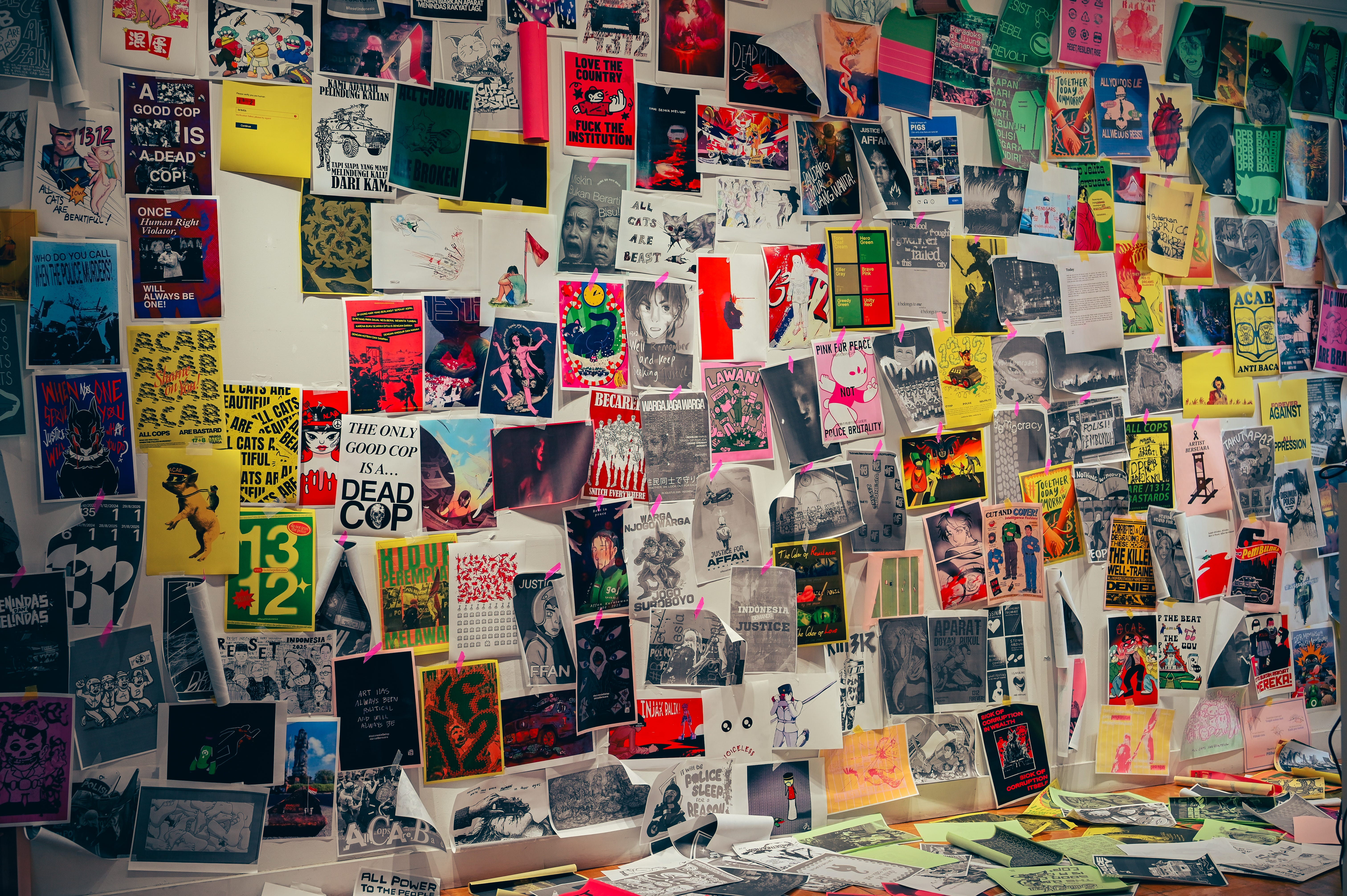
“We tried to minimize curation. We don’t judge what’s good or bad, what medium people use, or what kind of output they give (except for obvious unethical things like AI). That way, artists of all levels can join, break down barriers, and grow. For some, it’s a playground; for others, a learning ground; for many, it’s simply access to a gatekept world.”


Listening to them, I realized Rumpun +3+2 isn’t just another exhibition, it’s a deliberate act of making space, of letting art and politics intersect openly, without fear or hierarchy. And the response speaks for itself: in just a few days, nearly 2,000 artworks were submitted by Indonesian artists both inside and outside the country, all coming together in this event.

The Broader Significance
Rumpun +3+2 emerged in urgency. The idea was born from a phone call on a Sunday afternoon, just hours after reports of gunfire and lives lost in Indonesia. In response, Indonesian artists, at home and abroad, shared works online with incredible speed and passion. What began as an impromptu idea quickly transformed into a large-scale collective effort. Within only three days, thousands of submissions poured in, supported by new volunteers and new networks forming along the way.


For Indonesian artists abroad, this event represents both a challenge and a statement. Too often, the diaspora is told that because we live outside the country, we do not share the same struggles, and our voices cannot contribute to change. Rumpun rejects that notion. Instead, it shows that distance does not silence solidarity. Through art, Indonesians abroad can resist oppression, amplify issues happening at home, and build bridges across borders.
At its heart, Rumpun +3+2 is a reminder that Indonesians have always had a deep instinct to stand together. Faced with threats, we huddle close, helping one another in whatever ways we can. That spirit is alive here: artists encouraging artists, strangers becoming collaborators, a collective vision forming across geographies.
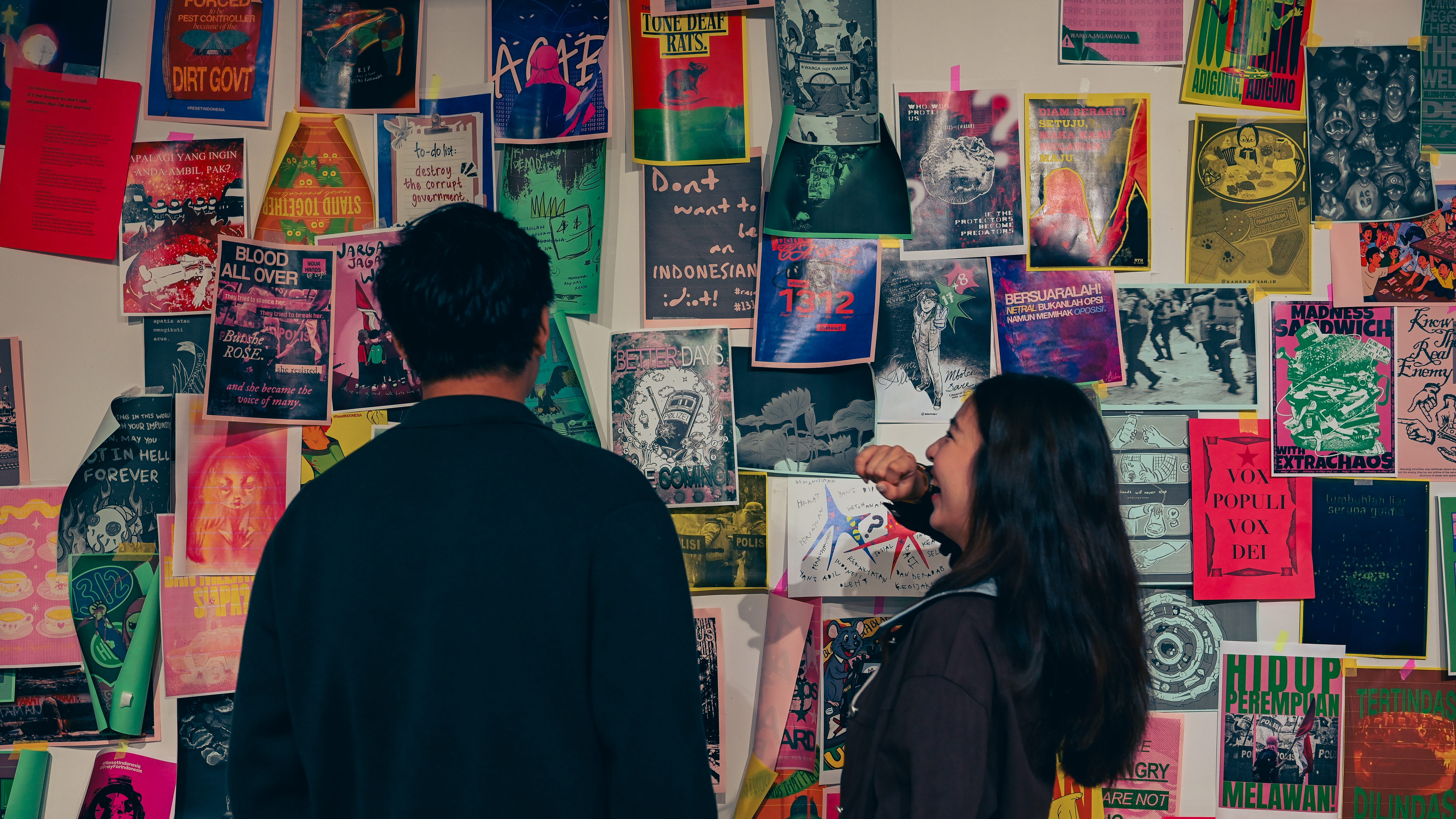
The hope is simple yet profound: never stop making art, and never believe you are alone. Even when access feels limited, even when communities are scattered across countries, there will always be people who share the same vision and are willing to support one another. Sometimes, that person may be as close as your own neighbor.

For me, Rumpun +3+2 is more than an art event, it’s a collective voice, a reminder that Indonesians, wherever we are, can still stand together and resist through creativity. Almost 2,000 works will be shown, each carrying its own story, anger, hope, and vision.
If you’re in Tokyo, I invite you to experience it in person.
📅 September 5th – September 7th, 2025
📍 KokoKita, 5-3-13 Toshima, Kita-ku, Tokyo 114-0003 [Maps link]
🔗 Instagram: @__rumpun
Go with an open heart, listen to what the artworks are trying to say, and stand in solidarity with the voices behind them.

Honorable mention
Main Team:
Design team:
PR:
@notmegapixel | Raufan from Tokyo Portraits
Setup team:
Information team: